

"Artificial intelligence for multilingual radio broadcasting"
A case study on a pilot AI integration in the radio field
How can AI be responsibly integrated into content translation and dubbing processes, balancing new opportunities with accuracy and quality? Where and when is the human expertise still indispensable?
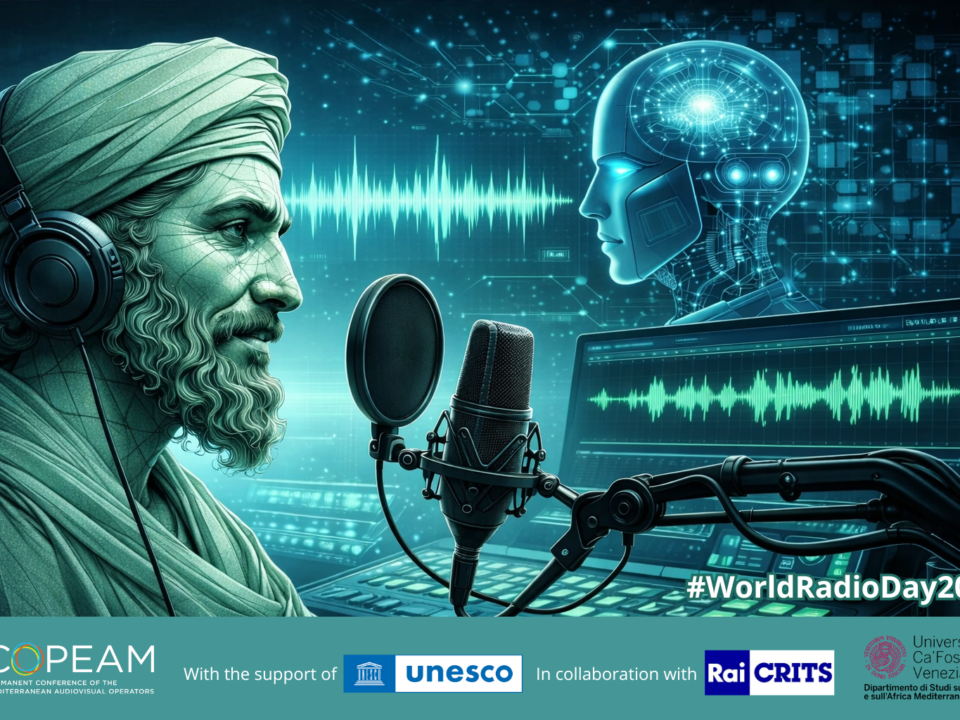
On the occasion of World Radio Day 2026 (13 February) – dedicated to “Radio and Artificial Intelligence” – COPEAM, with the support of UNESCO, has launched a pilot initiative exploring a concrete and innovative use of artificial intelligence in the radio sector.
At the heart of the project lies a key question: what is the right balance between artificial intelligence and human expertise when working with complex cultural content, where nuance, meaning, and context are essential? And to what extent is AI exposed to biases or errors when translating and dubbing from a language such as Arabic into a European language?
This case study focuses on the multilingual adaptation of an international cultural podcast series originally produced in Arabic, documenting each stage of the process through a series of short videos. From speech-to-text transcription to translation and dubbing, the videos offer both a technical and editorial perspective on the use of AI-based platforms in radio production.
The project is implemented in collaboration with Ca’ Foscari University of Venice and the RAI Centre for Technological Research and Innovation (CRITS), and is based on a selection of episodes from the COPEAM/ASBU radio series “Arab Philosophers – Ancient and Contemporary”.
By testing and documenting the full workflow of AI-assisted linguistic adaptation, this initiative provides a practical and replicable example of how artificial intelligence can be applied to the translation and dissemination of cultural radio content. At the same time, it aims to critically assess the potential, limitations, and challenges of currently available AI technologies, particularly in a multilingual and intercultural context.
Through this experience, COPEAM contributes to the broader reflection on the future of radio, highlighting how AI – when combined with human oversight – can open new pathways for accessibility, cultural exchange, international collaboration and innovation in radio broadcasting.
Potential impact on international collaborations between radios:
“Effectively integrating AI tools in the translation and dubbing process opens radio up to a new, global audience. According to COPEAM perspective, focused on international collaboration and promotion of cultural diversity, this is a great opportunity: it allows radio broadcasters – also small and limited-budget ones - to distribute content across multiple markets, collaborate with international partners, and amplify stories that would otherwise remain local” - Claudio Cappon, Secretary General of COPEAM.